Abstract. In Watch Dogs, the fictional Central Operating System (ctOS) connects infrastructure, communications and personal information through a system presented as efficient, protective and convenient. Its danger does not come from a single malicious feature. It comes from the concentration of visibility and control. The European debate commonly described as “Chat Control” is not ctOS, and treating the two as equivalent would be inaccurate. Yet the comparison is useful because both raise the same architectural question: what happens when private life becomes technically inspectable by default?

Legislative status - 22 July 2026
The European Parliament adopted amendments to the Council’s position on 9 July 2026. The amended position was then returned to the Council, which has three months to accept or reject the changes. The measure should therefore be described as an ongoing legislative process rather than a fully settled final law.
1. What Actually Happened?
The official proposal is not titled “Chat Control.” That name is used mainly by critics, journalists and digital-rights campaigners. The legal instrument concerns a temporary derogation from parts of the ePrivacy framework. Its purpose is to allow providers of certain messaging, webmail and internet communication services to use technologies voluntarily to detect, report and remove online child sexual abuse material and to identify possible solicitation of children.
The unusual political result attracted attention because 314 Members of the European Parliament voted to reject the Council position, while 276 voted against rejection and 17 abstained. Rejection at second reading required an absolute majority, which was not reached. Parliament instead completed its second reading with an amended position.
2. What the Council Text Would Permit
The Council text would create a narrow legal exception to the confidentiality rules in Articles 5 and 6 of the ePrivacy Directive. It would not order every provider to scan every conversation. Rather, providers choosing to perform detection could rely on the derogation only when the processing satisfied a series of necessity, proportionality, data-protection and oversight conditions.
The document discusses several categories of detection technology:
- Hash matching: comparing images or videos against digital signatures derived from previously verified illegal material.
- Image and video classifiers: estimating whether previously unknown material may fall within a prohibited category.
- Text or traffic analysis: identifying patterns that may indicate the solicitation or grooming of a child.
The text also says the selected technologies should be the least privacy-intrusive available, that processing should be limited to what is strictly necessary and that providers should reduce and report false positives. Audio communications are outside the scope of the Council text.
3. What the Measure Is Not
The public debate often collapses several different proposals into a single phrase. This creates the impression that the July vote introduced a universal, mandatory system capable of reading every encrypted conversation in Europe. That is not an accurate description of the text considered in July 2026.
| Claim | More accurate description |
|---|---|
| “The EU created a central government inbox.” | The temporary framework concerns voluntary processing performed by service providers under legal conditions and supervisory oversight. |
| “Every message must be scanned.” | The Council text permits qualifying voluntary detection; it does not impose a universal scanning obligation through this instrument. |
| “Encryption has already been banned.” | The Council text states that it should not prohibit or weaken end-to-end encryption, while Parliament sought a stronger operative exclusion for encrypted communications. |
| “The permanent Chat Control law is finished.” | The July measure is temporary and separate from the longer-term EU framework, which remains under negotiation. |
Terminology matters
“Chat Control” can refer to the temporary ePrivacy derogation, the separate permanent child sexual abuse regulation proposed in 2022, or the broader political dispute over message scanning. These are connected debates, but they are not the same legislative text.
4. The Encryption Question
End-to-end encryption is designed so that plaintext is available only at the communicating endpoints. The provider transports encrypted data but does not ordinarily possess the keys required to inspect the conversation. This architecture protects ordinary citizens, businesses, journalists, lawyers, public authorities and victims seeking confidential help.
The Council position recognises that weakening encryption could create opportunities for malicious third parties and says that the regulation should not be interpreted as prohibiting or weakening end-to-end encryption. However, there is a meaningful legal distinction between protecting encryption in a recital and excluding encrypted communications directly from the operative scope. Parliament’s July amendments sought to make that exclusion explicit.
The core technical tension
A provider cannot inspect end-to-end encrypted plaintext in the middle of the network without changing the security model. Inspection must occur before encryption, after decryption, or through a separate reporting mechanism. That is why proposals involving client-side scanning generate such intense debate: they may preserve encryption in transit while changing what the endpoint is allowed to do before a message is protected.
5. Why Watch Dogs Is a Useful Metaphor

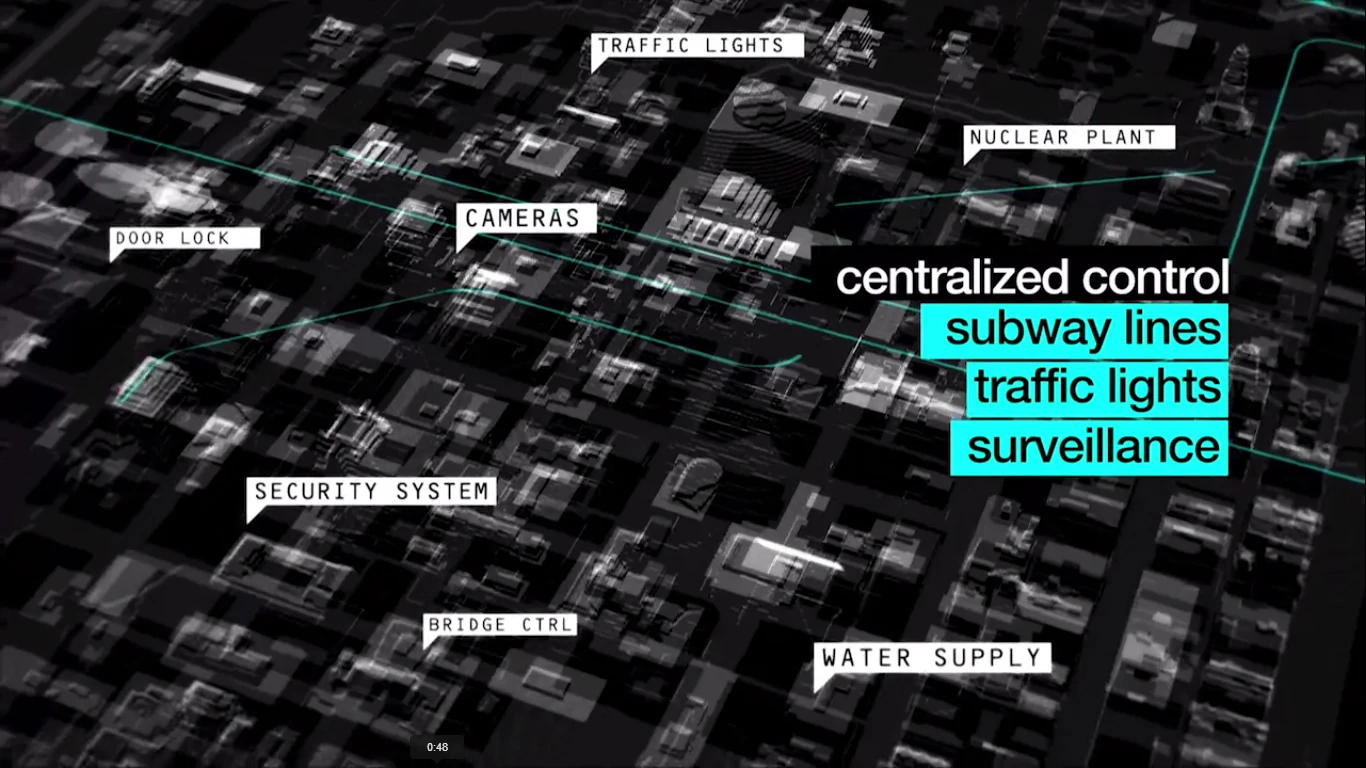
Ubisoft’s ctOS is a fictional city operating system that connects infrastructure, devices and information about residents. The system is initially justified through promises of safety and efficiency. Its real danger appears when access expands, private data becomes actionable and the same infrastructure can be repurposed by corporations, governments or attackers.
The comparison with European communications policy should remain disciplined. The EU is not deploying a citywide operating system, and the temporary derogation is not a central database operated like ctOS. The analogy instead concerns capability accumulation. Once a technical and legal capability for routine inspection exists, the long-term question is not only who uses it today, but who may use it tomorrow, for what purpose and with what degree of oversight.
Surveillance systems rarely arrive under the label “surveillance.” They are usually introduced as fraud prevention, public safety, content moderation, convenience or administrative efficiency. Those objectives may be legitimate. The risk emerges when exceptional access becomes ordinary infrastructure and when users cannot verify how the system classifies, reports or retains their communications.
6. False Positives Are Not Merely Statistical
Detection at scale is often described in terms of accuracy percentages. Yet even a small error rate can produce a significant number of incorrect flags when applied to millions or billions of communications. The impact is not limited to an inconvenient alert. A false match may involve the exposure of intimate material, account restrictions, reporting to authorities or the need to challenge an automated decision.
Hash matching against verified known material is conceptually narrower than using a classifier to evaluate previously unseen images or text. Grooming detection is even more context-dependent because ordinary conversations can contain age references, emotional language, sexual-health discussions, jokes or safeguarding conversations. The more a model attempts to infer intent, the greater the importance of context, human review, appeal mechanisms and measurable error reporting.
The Council text acknowledges this problem by requiring providers to minimise false positives, establish complaint mechanisms and report error rates. These safeguards matter, but they do not eliminate the architectural question: whether confidential communications should be routinely processed for suspicion indicators in the first place.
7. Safeguards, Oversight and Remaining Risks
The proposed safeguards include data-protection impact assessments, consultation with supervisory authorities, limits on retention, transparency reports, complaint mechanisms and judicial remedies. Providers would also need to report the kinds and volumes of data processed, detected cases, complaints, false-positive rates, retention policies and the organisations receiving reports.
These requirements are substantial, but governance cannot be evaluated only by counting safeguards. Their effectiveness depends on implementation: whether supervisory authorities have sufficient technical expertise, whether reports are detailed enough for external scrutiny, whether users are informed when mistakes occur, and whether remedies are available before irreversible harm is caused.

8. The Real Question: What Architecture Do We Normalise?
Protecting children from sexual abuse is a legitimate and urgent public objective. Protecting the confidentiality and security of communications is also essential. Presenting these goals as mutually exclusive leads to poor policy and weaker technology. The challenge is to target offenders and support victims without turning every user into a continuously inspected subject.
A proportionate system should favour narrow detection of already verified illegal material, strong judicial and supervisory controls, transparency, independent auditing, effective remedies and designs that do not undermine encryption. It should also invest in measures beyond scanning: specialist law-enforcement capacity, faster responses to victim reports, platform safety engineering, prevention, education and international cooperation.
The lesson of Watch Dogs is not that all connected technology inevitably becomes oppressive. It is that architecture creates power. A system designed for universal visibility will eventually invite broader uses, while a system designed around minimisation, compartmentalisation and encryption makes misuse more difficult.
9. Conclusion
Europe’s 2026 ePrivacy debate is neither the arrival of ctOS nor an insignificant technical amendment. It is a dispute about the boundary between private communications and provider-side detection and about the conditions under which an exception can become infrastructure.
The most important question is not whether society should protect children; it must. The question is whether that protection is built through targeted, accountable and technically defensible measures or through a general capability to inspect private life. Fiction becomes useful when it helps us recognise architectural risks before they become ordinary. In that sense, Watch Dogs remains less a prediction than a warning about where concentrated visibility can lead.
References
- Council of the European Union. “Council moves to reinstate interim measure to combat child sexual abuse online,” 2 July 2026. Council press release.
- European Parliament. “Combating child sexual abuse online: support for more limited ePrivacy derogation,” 9 July 2026. European Parliament press release.
- Council of the European Union. “Position of the Council at first reading,” document ST 11261/1/26 REV 1, 2 July 2026. Official PDF.
- Isabella Ward. “A Majority of European Lawmakers Voted Against Letting Big Tech Read Our Messages. They’re Going to Anyway.” WIRED, 9 July 2026. WIRED analysis.
- Ubisoft. “Watch Dogs 2 Reveal—What You Need to Know About the ctOS Bay Area Invasion.” Ubisoft News.